
- All
- Product Name
- Product Keyword
- Product Model
- Product Summary
- Product Description
- Multi Field Search


Views: 0 Author: Site Editor Publish Time: 2026-07-24 Origin: Site


Modern building material specification has shifted from aesthetic preference to a critical life-safety and liability issue. Regulatory scrutiny on exterior cladding is intense. Architects and specifiers face procurement confusion caused by overlapping terminology, outdated product data, and the severe legal risks of specifying non-compliant cladding for mid-to-high-rise projects. Choosing the wrong material leads to catastrophic failures and massive liability.
Successfully specifying aluminum composite panels requires a rigid evaluation of core materials, coating technologies, and installation environments. Understanding the distinct classifications ensures code compliance and long-term structural integrity. This guide breaks down the technical classifications of these materials to support defensible procurement decisions and mitigate project risks.
Core composition dictates compliance: The primary differentiator between types of aluminum composite panels is the core material (PE, FR, or A2), which directly determines fire performance and legal application.
Coatings define lifespan: Surface finish selection (PVDF vs. FEVE vs. Polyester) is the primary driver for UV resistance, color retention, and maintenance cycles in exterior environments.
Verification is non-negotiable: Relying solely on manufacturer marketing is a high-risk strategy; specifiers must demand independent, third-party testing certifications (e.g., NFPA 285, EN 13501-1) for the exact panel assembly being installed.
System over panel: The performance of any aluminum composite panel is heavily dependent on the chosen installation system (routed cassette vs. flat riveted) and thermal expansion management.
Table of Contents
The fundamental architecture of these panels relies on a highly engineered sandwich structure. The standard composition consists of two thin aluminum skins, typically ranging from 0.3mm to 0.5mm in thickness. Manufacturers continuously bond these skins under high tension and temperature to a central core material. This continuous lamination process ensures structural integrity. It prevents delamination under wind loads and thermal stress. We see many failures in the field when cheap adhesives fail under high heat, causing the skins to bubble and detach.
Understanding the division of labor between the components is vital for any facade engineer. The exterior aluminum skins provide structural rigidity, impact resistance, and a smooth canvas for architectural finishes. They protect the interior layers from weather and physical damage. Conversely, the core material is entirely responsible for the panel's overall weight, thermal behavior, and fire combustibility. The core dictates where and how you can legally install the panel.
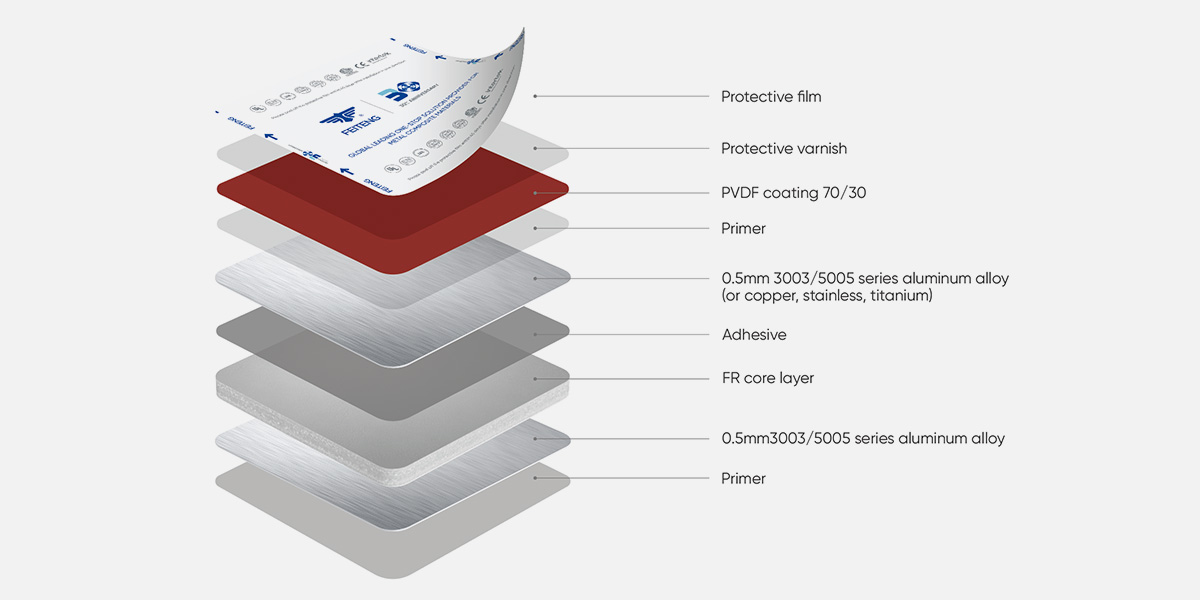
When comparing different cladding options, weight is a primary structural consideration. Composite panels offer an exceptionally high strength-to-weight ratio. They provide the same visual flatness and rigidity as much thicker solid aluminum plates but at a fraction of the weight. This reduction in dead load lowers the structural requirements for the building frame. It also simplifies handling on the job site, requiring fewer crane lifts.
Solid metal sheets readily transmit sound and temperature. The composite core within a sandwich panel provides superior vibration damping and thermal insulation compared to single-sheet solid aluminum claddings. The core acts as a buffer. It reduces the transmission of exterior noise and minimizes thermal bridging across the building envelope.
Fabrication, material, and installation efficiencies heavily favor composite structures. Routing and folding composite panels into cassettes requires less specialized heavy machinery than bending thick solid aluminum plates. The lighter weight accelerates installation timelines. This reduces labor hours and heavy lifting equipment requirements on site.
Feature | Aluminum Composite Panels (4mm) | Solid Aluminum Plates (3mm) |
|---|---|---|
Weight per sqm | Approx. 5.5 kg - 7.5 kg | Approx. 8.1 kg |
Rigidity | High (due to sandwich structure) | Moderate (requires stiffeners) |
Fabrication Ease | Excellent (easy to route and fold) | Fair (requires heavy press brakes) |
Acoustic Dampening | Superior | Poor |
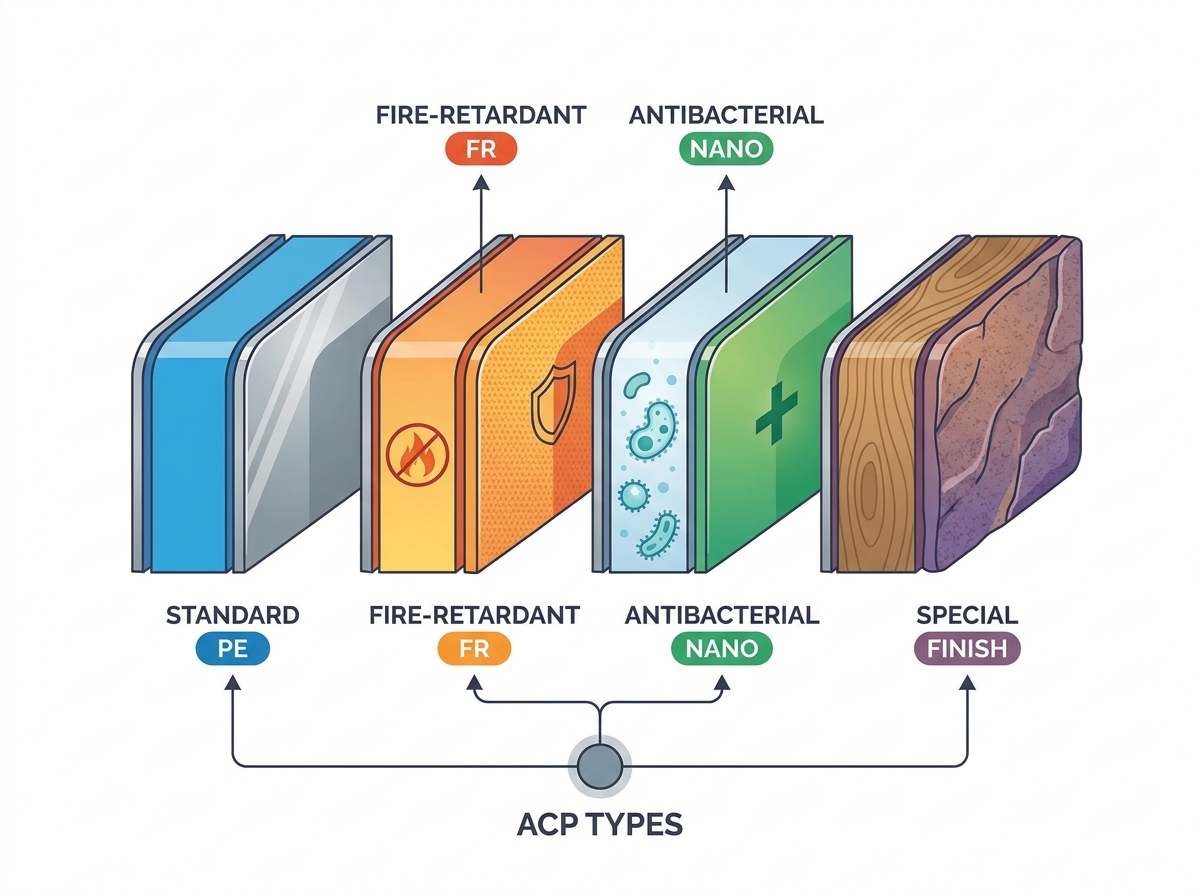
Polyethylene core panels feature a 100% thermoplastic polyethylene core. Historically, this was the standard for the industry. The performance profile of PE panels includes being extremely lightweight, highly formable, and easy to route. However, the implementation reality carries severe risks. PE cores are highly combustible. When exposed to high heat, the core melts and ignites, rapidly spreading fire up a building facade. Consequently, PE cores are now strictly prohibited in multi-story architectural applications across most global building codes. Valid use cases are strictly limited to single-story structures, temporary exhibition stands, interior partitions, and commercial signage where fire spread risk is minimal.
Fire-retardant panels utilize a blended core containing approximately 70% non-combustible mineral fillers, such as aluminum trihydroxide or magnesium hydroxide, combined with a 30% polymer binder. This composition delays flame spread and significantly reduces smoke generation compared to standard PE panels. They maintain good routing and folding capabilities for fabrication. However, the labeling of "FR" and "FR Plus" can be ambiguous. Specifiers must verify specific local code limitations. FR panels are often restricted to buildings under a certain height threshold, typically 40 feet or 18 meters, depending on the jurisdiction and the specific fire testing assembly.
A2 core panels represent the highest safety standard in the industry. The composition contains 90% or more inorganic mineral compounds with only a minimal amount of organic binding agent. Under extreme heat, A2 panels produce zero flaming droplets and minimal smoke, complying with strict non-combustibility standards. There are trade-offs. The high mineral content makes A2 panels slightly heavier, stiffer, and more demanding on routing tools during fabrication compared to PE or standard FR cores. Despite this, they are the mandatory standard for high-rise facades, hospitals, schools, and high-occupancy infrastructure.
Core Type | Mineral Content | Combustibility | Primary Application |
|---|---|---|---|
PE (Polyethylene) | 0% | Highly Combustible | Signage, single-story, interiors |
FR (Fire Retardant) | ~70% | Low Combustibility (B1) | Low-to-mid-rise (check local codes) |
A2 (Non-Combustible) | >90% | Non-Combustible (A2) | High-rise, hospitals, schools |
The transportation sector demands materials that maximize fuel efficiency without sacrificing structural integrity. Specific lightweight, high-rigidity variations of composite panels are manufactured for use in modern vehicle bodies, commercial truck trailers, railcars, and aircraft interiors. These specialized panels often utilize thinner skins and highly optimized cores to reduce vehicle weight while providing impact resistance against road debris and daily operational wear. We often see 0.2mm or 0.3mm skins used here to shave off every possible ounce.
Saltwater environments destroy standard architectural materials rapidly. Marine-grade panels feature highly corrosion-resistant 5000-series aluminum alloys. These are specifically designed for marine vessel hulls, superstructures, and offshore platform living quarters. The specialized alloys prevent salt-spray corrosion, ensuring structural stability and aesthetic longevity in harsh offshore conditions. Standard 3000-series alloys will pit and degrade quickly if used in these environments.

PVDF coatings utilize a fluoropolymer resin that provides exceptional resistance to UV degradation, chalking, and chemical weathering. The tight molecular bond of the resin ensures that colors remain vibrant even under intense solar exposure. PVDF is the industry standard for exterior architectural cladding, routinely supporting 15-to-20-year color warranties. It is the default choice for high-rise facades exposed to severe weather. When specifying types of aluminum composite panels for exterior use, PVDF is the baseline.
FEVE coatings offer distinct advantages over PVDF. FEVE achieves significantly higher gloss levels and a much broader color gamut, allowing for vibrant, highly reflective finishes. Additionally, FEVE provides superior chemical and graffiti resistance. The application is ideal for premium corporate identity projects, high-traffic ground-level facades, and vibrant architectural accents where visual impact and easy cleaning are paramount. You can wipe spray paint right off a proper FEVE clear coat.
Polyester coatings provide a softer, highly flexible finish that is highly economical. However, this coating is susceptible to rapid UV fading and chalking when exposed to harsh sunlight. Therefore, polyester coatings are strictly recommended for interior applications, corporate signage, display boards, or short-term exterior structures where long-term weather resistance is not required. Never specify polyester for a permanent exterior facade.
Evaluating local building codes is the first step in specifying materials. Frameworks like the IBC in the US or BS EN 13501-1 in Europe dictate material choices based on building height and occupancy. It is critical to understand that the entire wall assembly, including insulation, weather barriers, and the panel itself, must pass systemic fire tests like NFPA 285. Testing the panel in isolation is insufficient for high-risk applications. You must test the exact assembly you plan to build.
Site-specific risks dictate alloy and coating selection. For coastal projects, specifying marine-grade aluminum alloys, such as 5005 or 5005A, paired with high-build PVDF coatings is necessary to prevent salt-spray corrosion and filiform degradation. Industrial environments may require FEVE coatings to resist chemical fallout and facilitate easier maintenance. Always check the local environmental data before selecting the coating system.
Wind load requirements directly dictate the required thickness of the aluminum skins. High-rise applications typically require 0.5mm skins to prevent deflection under heavy wind loads, while 0.3mm skins may suffice for low-rise or interior applications. The structural load also influences the choice of core rigidity, ensuring the panel remains flat and secure within its mounting extrusion over the building's lifespan.

The risk of receiving panels with fraudulent fire ratings is a documented industry issue. Counterfeit cores can lead to catastrophic liability. Specifiers must mandate batch-specific testing data, continuous core stamping along the panel edges, and independent laboratory verification prior to installation. Relying solely on a generic product data sheet is unacceptable for high-rise construction. We pull samples from every delivery and burn them on site to verify the core.
Evaluating the trade-offs between wet-seal, dry-seal, and rainscreen installation methods is necessary for water management. A major risk during installation is galvanic corrosion. If incompatible fasteners, such as non-stainless steel screws or rivets, are used with aluminum panels, moisture will trigger a corrosive reaction, degrading the connection points and compromising the facade's structural integrity.
Aluminum expands and contracts significantly with temperature changes. Failing to account for this leads to panel bowing and oil-canning, ruining the facade's aesthetic. Mitigation strategies require engineering appropriate expansion gaps in the mounting extrusions. Installers must calculate these tolerances based on the panel's specific coefficient of thermal expansion and the expected temperature variance at the project site.
Calculate the maximum temperature differential for the site.
Determine the coefficient of thermal expansion for the specific panel.
Design the extrusion system to allow for independent panel movement.
Use sliding clips or oversized holes for fasteners.
Choosing the right type of aluminum composite panel requires more than comparing appearance or cost. The ideal solution depends on fire safety requirements, core material, coating technology, environmental exposure, and installation systems. By selecting the appropriate ACP type for your project, you can improve building safety, extend service life, and ensure long-term architectural performance.
About Feiteng
Feiteng specializes in manufacturing high-quality aluminum composite panels for architectural facades, commercial buildings, signage, and decorative applications. With advanced production technology, comprehensive quality control, certified fire-rated products, and flexible OEM/ODM services, Feiteng provides reliable ACP solutions designed to meet the performance, safety, and aesthetic requirements of projects worldwide.
Select ACP panels with the appropriate core material based on local fire regulations and building requirements.
Choose coating systems that match your project's environmental conditions and expected service life.
Verify product certifications, fire test reports, and manufacturing quality before procurement.
Work with experienced manufacturers that provide technical support and installation guidance throughout your project.
Before selecting aluminum composite panels, evaluate core composition, coating technology, fire compliance, manufacturing quality, environmental suitability, and supplier capabilities to ensure reliable long-term performance and project success.
A: The difference lies in the mineral core percentage. FR panels contain about 70% non-combustible minerals and achieve a B1 fire rating, delaying flame spread. A2 panels contain 90% or more inorganic minerals, achieving strict non-combustibility standards, producing zero flaming droplets, and are required for high-rise applications.
A: They are not globally illegal, but they are strictly prohibited in specific applications, most notably multi-story exterior cladding. They remain legal and appropriate for single-story structures, temporary signage, and interior partitions where fire spread risk is low.
A: Composite panels offer a significantly higher strength-to-weight ratio. They provide the rigidity of thick solid metal plates at a fraction of the weight, which reduces structural dead loads, lowers material costs, and requires less heavy machinery during fabrication and installation.
A: Standard architectural panels have an overall thickness of 4mm, utilizing 0.5mm aluminum skins on both sides. Thinner 3mm options are used for signage, while 6mm options are available for specialized applications requiring extreme rigidity.
A: PVDF coatings typically carry a 15 to 20-year color warranty. The actual field longevity often exceeds this, depending on environmental factors like UV intensity, salt spray exposure, and regular maintenance cleaning.
A: Yes, A2 panels can be fabricated, but their high mineral content makes them stiffer than PE cores. They require specific routing tools and have larger minimum bending radii to prevent the core from cracking during the folding process.


