
- All
- Product Name
- Product Keyword
- Product Model
- Product Summary
- Product Description
- Multi Field Search


Views: 0 Author: Site Editor Publish Time: 2026-07-24 Origin: Site


Modern architecture relies heavily on aluminum composite panels to achieve sleek, flat facades. Growing global scrutiny of cladding materials demands a rigorous evaluation of these systems. Architects, developers, and facility managers face a constant challenge on every job site. They must balance project budgets and aesthetic goals with strict structural, thermal, and life-safety compliance requirements. Choosing the wrong cladding material compromises building integrity and occupant safety, leading to massive remediation efforts down the line.
This article provides an objective, evidence-based analysis of ACP advantages and disadvantages. Specifiers will learn how to navigate core material differences, installation realities, and long-term maintenance trade-offs. We designed this guide to help you make informed decisions regarding exterior envelopes. You will understand exactly where these panels excel in the field and where they introduce structural or compliance risks.
Cost vs. Performance: ACP offers an unmatched strength-to-weight ratio and rapid installation, significantly reducing structural load and labor costs compared to solid metals or masonry.
The Fire Compliance Mandate: The primary disadvantage and risk factor of ACP lies in the core material; specifying Fire-Retardant (FR) or non-combustible (A2) cores is non-negotiable for multi-story applications.
Aesthetic Longevity: High-quality PVDF coatings provide excellent weather and UV resistance, but long-term facade integrity relies heavily on proper joint sealant maintenance and coating-specific warranties.
Application Suitability: ACP is highly effective for exterior rainscreen systems, corporate identity signage, and canopy fascias when engineered and installed to local building codes.
Table of Contents
Evaluating any facade material requires a clear understanding of baseline performance metrics. A successful cladding system must deliver reliable weatherproofing and thermal performance. It must retain its aesthetic appeal over decades of UV exposure and harsh weather. Furthermore, the system must maintain structural integrity under varying wind loads and seismic conditions. Specifiers evaluate materials against these strict operational demands before approving any submittals.
Building envelopes act as the primary defense against the elements. When you specify a material, you are committing to its performance characteristics for the lifespan of the building. This means looking beyond the initial visual appeal and digging into the material science. You need to know how the panels handle thermal expansion, how they react to moisture, and what happens when they face blunt force impact on a busy street level.
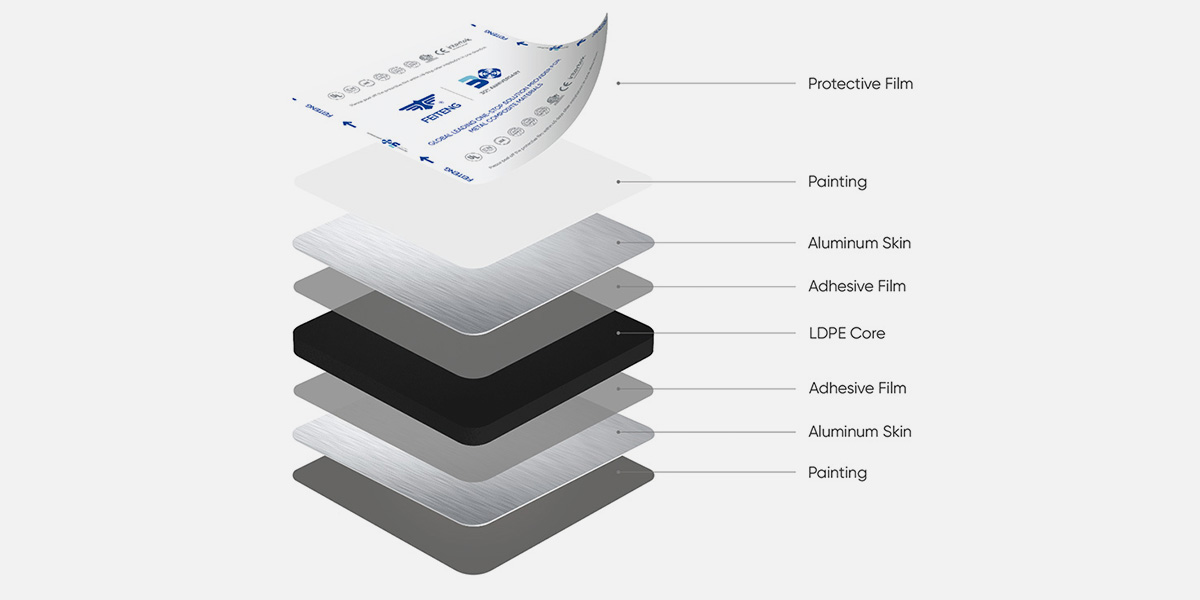
An aluminum composite panel consists of two thin aluminum sheets bonded to a non-aluminum core. This sandwich structure dictates the overall performance profile of the material. The aluminum skins provide weather resistance, finish options, and surface durability. The core material provides rigidity, flatness, and acoustic dampening. Understanding this composite nature is essential for evaluating ACP applications in commercial construction.
Manufacturers typically produce these panels in standard thicknesses of 3mm, 4mm, and 6mm. The 4mm thickness serves as the industry standard for exterior cladding. The bonding process uses high heat and pressure to ensure the skins do not delaminate from the core under extreme temperature fluctuations. This manufacturing method creates a panel that behaves differently than solid metal sheets.
We evaluate exterior panels through several primary lenses. Upfront material availability and installation economics drive initial project decisions. Lifecycle maintenance requirements dictate long-term viability for the facility management team. Structural load impact determines engineering requirements for the primary building frame. Finally, regulatory compliance acts as the ultimate filter for material selection.
You must weigh these dimensions against the specific requirements of your project. A low-rise retail center has vastly different cladding needs than a forty-story residential tower. The evaluation process requires input from the architect, the structural engineer, the facade consultant, and the local fire marshal.
The composite structure provides rigidity comparable to heavy-gauge solid aluminum. However, it achieves this at a fraction of the total weight. The core separates the aluminum skins, increasing the moment of inertia. This physical separation allows the panel to resist bending and wind deflection effectively. You get a perfectly flat facade without the heavy mass of solid metal.
This weight reduction creates cascading benefits for structural engineering. Lighter dead loads allow engineers to reduce structural steel and concrete requirements. Sub-framing systems can utilize lighter extrusions and fewer heavy-duty anchors. This efficiency accelerates construction schedules and reduces the overall carbon footprint of the building's structural frame.
Material Type | Thickness | Approximate Weight (kg/m2) | Relative Rigidity |
|---|---|---|---|
Aluminum Composite Panel | 4mm | 5.5 - 7.5 | High |
Solid Aluminum Sheet | 3mm | 8.1 | Moderate |
Solid Steel Sheet | 1.5mm | 11.8 | High |
Fiber Cement Board | 8mm | 11.5 - 14.0 | Very High |
Material economics strongly favor composite panels over traditional heavy cladding. Solid metal sheets, quarried stone, and high-pressure laminates require substantial upfront investment. Composite panels deliver similar aesthetic results while keeping material budgets manageable. Standardized manufacturing processes ensure consistent quality and high global availability. This standardization minimizes lead times compared to custom-cast panels or imported stone.
Labor savings represent another massive advantage on the job site. Lightweight panels are exceptionally easy to handle. Installation crews require less heavy lifting equipment and crane time. Fabricators can route, fold, and shape the panels rapidly. This ease of manipulation drastically reduces overall construction schedules. Faster installation means earlier building dry-in and quicker project handover to the client.

Fabrication flexibility sets composite materials apart from brittle alternatives. Installers can easily cut, bend, roll, and shape the panels. This flexibility does not compromise structural integrity. Architects can design complex curves, sharp corners, and intricate geometric facades. The material adapts to the design rather than forcing the design to adapt to the material.
Advanced coatings protect the aluminum skins from severe environmental degradation. PVDF, Lumiflon, and FEVE resin systems resist UV radiation, chalking, and chemical weathering. These finishes maintain gloss and color consistency across large elevations. Industry-standard performance warranties typically range from 10 to 30 years. These warranties guarantee paint finish, gloss retention, and coating adhesion under specified environmental conditions.
Route a V-shaped groove on the back of the panel, leaving the front aluminum skin intact.
Fold the panel along the routed groove to create a crisp 90-degree return edge.
Reinforce the corners with aluminum extrusions and structural rivets.
Attach mounting clips to the return edges for integration with the sub-framing system.
Composite panels function exceptionally well within ventilated rainscreen systems. These systems improve overall building energy efficiency. The ventilated cavity allows moisture to escape and reduces heat transfer into the building envelope. This continuous airflow lowers HVAC loads during peak summer months. Proper rainscreen design prevents thermal bridging across the exterior wall assembly.
The core material also provides inherent acoustic dampening properties. Solid metal sheets often reverberate and amplify exterior noise. The polymer or mineral core absorbs sound vibrations effectively. This acoustic isolation improves indoor environmental quality for building occupants, especially in dense urban environments or near major transportation hubs.
The combustibility of standard Polyethylene (PE) cores remains the industry's most critical evaluation factor. Historical facade fires have highlighted the severe dangers of using unmodified PE cores in high-rise applications. When exposed to high temperatures, PE cores can melt, ignite, and propagate flames rapidly up the exterior wall. This reality has driven a strict regulatory shift away from PE cores in mid-to-high-rise construction globally.
Mitigating this risk requires strict specification protocols. Specifying mineral-filled Fire-Retardant (FR) or A2 (non-combustible) cores is absolutely necessary. These advanced cores resist ignition and prevent flame spread. They must meet stringent building codes, such as NFPA 285 or EN 13501-1. Facility owners must verify independent fire test reports before approving any panel delivery to the job site.
The thin aluminum skins typically measure between 0.3mm and 0.5mm in thickness. While the core provides rigidity, the thin skin remains vulnerable to localized point impacts. Blunt force can cause visible denting or puncture the protective coating. Once the coating is compromised, the underlying aluminum becomes susceptible to oxidation.
Specifiers must identify high-risk zones during the design phase. Ground-level facades, high-traffic pedestrian areas, and loading docks experience frequent impacts. Using composite panels in these zones often leads to cosmetic damage. Designers should consider specifying heavier gauge solid metals or masonry for the first ten feet of the building elevation.
Environmental impact evaluations reveal significant end-of-life recycling challenges. The technical difficulty lies in separating the tightly bonded polymer or mineral core from the aluminum skins. Standard recycling facilities cannot process these composite materials efficiently. Specialized mechanical separation plants are required to reclaim the raw aluminum and core materials.
This contrasts sharply with easily recyclable solid metal alternatives. Solid aluminum can be melted down and repurposed endlessly without quality degradation. The complex recycling process for composite panels can negatively impact green building certifications. Projects pursuing LEED or BREEAM ratings must carefully document the material lifecycle and end-of-life disposal strategies.
The panels themselves are completely waterproof and impermeable. However, the facade's overall integrity relies entirely on the weather-barrier system and joint sealants. Wet-seal systems utilize silicone sealants between panel joints to prevent water intrusion. These sealants degrade over time due to UV exposure, thermal expansion, and environmental pollutants.
This degradation creates a significant maintenance burden. Facility managers must schedule regular inspections to identify failing joints. Cleaning and replacing silicone sealants at panel joints is labor-intensive and requires expensive access equipment. Failure to maintain these joints leads to moisture ingress, mold growth, and deterioration of the underlying wall assembly.
Maintenance Task | Recommended Frequency | Primary Objective |
|---|---|---|
Visual Inspection | Bi-Annually | Identify sealant failure, impact damage, or loose fasteners. |
Low-Pressure Wash | Annually | Remove dirt, industrial fallout, and salt deposits to protect the coating. |
Sealant Replacement | Every 7-10 Years | Cut out and replace degraded silicone to maintain weatherproofing. |
Dissimilar metal corrosion poses a hidden risk to facade longevity. If panel edges or mounting hardware are improperly detailed, moisture acts as an electrolyte. Using carbon steel fasteners or incompatible sub-framing directly against the aluminum skins initiates galvanic corrosion. Installers must use stainless steel fasteners and proper isolation tapes to prevent this chemical reaction.
Field crews often overlook this detail during rushed installations. When aluminum contacts bare steel in the presence of rainwater, the aluminum acts as an anode and corrodes rapidly. You must specify nylon shims, isolation tape, or specialized coatings on the sub-framing to break the electrical contact between the dissimilar metals.
Selecting the right cladding requires comparing composite panels against viable alternatives. Each material presents unique trade-offs regarding weight, combustibility, and workability. You must evaluate these factors based on the specific constraints of your job site.
Material | Weight | Fire Performance | Workability | Maintenance Need |
|---|---|---|---|---|
Aluminum Composite Panel (FR/A2) | Lightweight | High (Code Compliant) | Excellent (Rout & Return) | Moderate (Sealants) |
Solid Aluminum Panel | Heavy | Excellent (Non-combustible) | Moderate (Requires heavy machinery) | Low |
Fiber Cement Board | Very Heavy | Excellent (Non-combustible) | Low (Brittle, dust generation) | Low |
Solid aluminum offers superior fire performance and 100% recyclability. It contains no combustible core materials. However, solid metal is significantly heavier and more expensive. It is also prone to "oil-canning" or visible waviness across large flat spans. Preventing oil-canning requires heavy-gauge sheets and extensive rear stiffening, which further increases material and labor costs.
When working with solid aluminum, fabrication becomes much more difficult. You cannot easily route and fold a 3mm solid sheet on site. It requires heavy press brakes in a controlled shop environment. This limits field adjustments and requires perfect field measurements before fabrication begins.
Fiber cement is inherently non-combustible and highly durable. It offers a distinct matte or textured aesthetic preferred in certain architectural styles. However, fiber cement is much heavier than composite aluminum. It is brittle during installation and requires specialized cutting tools to manage silica dust. Fiber cement generally lacks the metallic finish options and clean curving capabilities of aluminum composites.
Installers must handle fiber cement carefully to prevent cracking the corners before installation. The heavy weight requires more robust sub-framing and more personnel to lift each panel into place. While it excels in fire resistance, it falls short in design flexibility and installation speed.
Contractors often evaluate composite panels against plywood for interior partition walls, signage, or temporary structures. Plywood is cheaper initially but susceptible to moisture damage. Composite panels provide superior water resistance and perfect flatness. They carry zero risk of warping, rotting, or splintering over time. Despite a higher initial material cost, the longevity and clean finish justify the upgrade for specialty applications.
Specifiers must demand comprehensive documentation from manufacturers before approving submittals. Do not rely on marketing brochures. Request independent fire test reports from certified laboratories. Verify wind-load engineering data specific to the project location. Ensure the material meets all relevant ASTM standards for tension, deflection, and coating adhesion. Strict compliance checking prevents costly tear-offs later.
Mounting systems dictate long-term maintenance requirements. Wet-seal systems rely on exposed silicone joints to keep water out. Dry-joint rainscreen systems manage moisture egress behind the panel face. We strongly advocate for dry-joint systems. They reduce sealant maintenance, allow the wall cavity to breathe, and provide a cleaner aesthetic without visible caulk lines.
Improper fabrication ruins high-quality panels. Using certified fabricators ensures precise routing and folding. Incorrect router depths cause micro-cracking of the aluminum skin at the structural seams. This cracking compromises the panel's structural integrity and invites corrosion. Always require installer qualifications and verify past project performance to guarantee precise execution on site.
Verify all field measurements before cutting panels to avoid material waste.
Use CNC routers for precise depth control when creating fold lines.
Install thermal isolation pads between the aluminum clips and steel sub-framing.
Leave appropriate expansion gaps between panels to accommodate thermal movement.
Remove the protective film immediately after installation to prevent UV baking.
Aluminum composite panels remain one of the most versatile cladding materials for modern architecture, offering an excellent balance of lightweight construction, design flexibility, and long-term durability. However, selecting the right core material, coating system, and installation method is essential to ensure fire safety, structural reliability, and compliance with local building regulations. A well-informed specification process helps maximize performance while minimizing long-term maintenance and project risks.
About Feiteng
Feiteng is a professional manufacturer of aluminum composite panels for architectural facades, commercial buildings, signage, and decorative applications. With advanced manufacturing equipment, strict quality control, certified fire-rated products, and comprehensive OEM/ODM services, Feiteng delivers reliable ACP solutions that combine outstanding durability, aesthetic appeal, and long-term performance for projects around the world.
Evaluate your project's fire safety, structural, and environmental requirements before selecting ACP products.
Choose certified core materials and high-performance coating systems suitable for your application.
Verify manufacturer certifications, testing reports, and installation recommendations before procurement.
Follow proper installation and maintenance practices to maximize the lifespan and performance of your ACP facade.
Before selecting aluminum composite panels, evaluate fire performance, coating technology, installation systems, long-term maintenance requirements, manufacturing quality, and supplier expertise to ensure a safe, durable, and cost-effective cladding solution.
A: Polyethylene (PE) cores are made of 100% combustible plastic and pose severe fire risks in high-rise buildings. Fire-Retardant (FR) cores contain a high percentage of non-combustible mineral compounds mixed with a small amount of polymer binder. FR cores resist ignition, produce less smoke, and prevent rapid flame spread, making them mandatory for multi-story construction.
A: A properly installed panel system lasts 20 to 30 years or more. Lifespan relies heavily on the quality of the PVDF coating and the surrounding environmental exposure. Typical manufacturer warranties cover paint finish, gloss retention, and delamination for 10 to 20 years, provided regular maintenance protocols are followed.
A: The panels themselves are completely impermeable to water. However, the overall facade system is not inherently waterproof. The building's weather resistance relies entirely on proper joint detailing, flashing, and the underlying weather-resistant barrier (WRB) installed behind the cladding.
A: Yes. Composite panels require thinner aluminum skins, reducing raw material costs. Additionally, their lightweight nature reduces structural framing requirements and significantly lowers installation labor costs. Solid aluminum requires thicker gauges to prevent oil-canning, making it heavier and more expensive to manufacture and install.
A: Yes. They are frequently used for interior partition walls, column covers, cabinetry backing, and corporate signage. They offer excellent flatness and a premium finish. However, specifiers must ensure the selected panels still comply with interior fire and smoke generation codes.
A: Maintain facades using low-pressure washing with clean water and mild, pH-neutral detergents. Use soft sponges or soft-bristle brushes. You must strictly avoid harsh alkaline chemicals, acidic solutions, or abrasive scrubbers, as these will permanently damage the protective PVDF coating and void the manufacturer's warranty.
A: Yes, but the process is complex. The challenge lies in separating the tightly bonded core from the aluminum skins. Specialized recycling plants use mechanical shredding and density separation techniques to isolate the aluminum for smelting and repurpose the core material for lower-grade plastic products.


