
- All
- Product Name
- Product Keyword
- Product Model
- Product Summary
- Product Description
- Multi Field Search


Views: 0 Author: Site Editor Publish Time: 2026-07-24 Origin: Site


Architectural and construction specifications often suffer from persistent ambiguity regarding aluminum cladding materials. Contractors, architects, and facade engineers frequently encounter conflicting manufacturer definitions and regional jargon on job sites. This confusion complicates procurement and creates unnecessary project risks. Understanding the exact distinction between these terms is mandatory for modern construction. Misunderstanding these acronyms can lead to severe consequences. Failing to specify the exact core composition behind the acronym often results in failed building inspections. It can also cause non-compliance with strict fire codes and trigger extensive project rework. While the industry uses the acronyms interchangeably, your evaluation must focus on material composition. You must evaluate core types, brand specifications, and application suitability. The debate over ACP vs ACM is less about the letters and more about the physical product. This article serves as a definitive framework for specifying the correct aluminum composite product. You will learn how to navigate terminology, evaluate core materials, and select the right cladding for commercial and industrial projects.
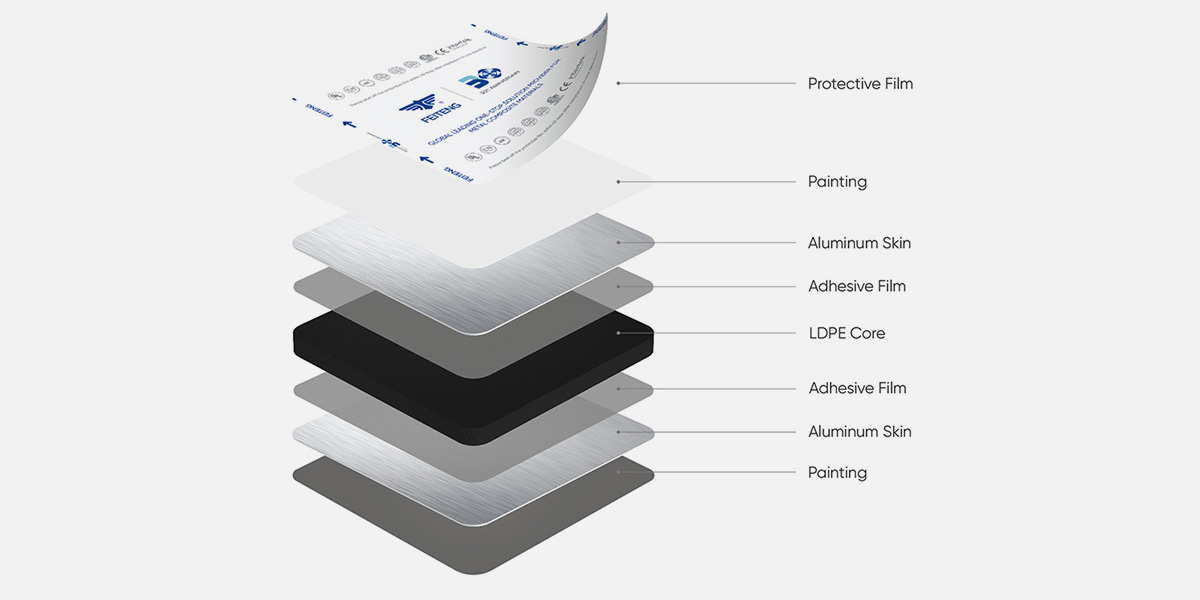
Semantic Distinction: ACM (Aluminum Composite Material) refers to the raw material category, while ACP (Aluminum Composite Panel) refers to the finished, manufactured product used in installation.
The Core Matters More Than the Acronym: The primary driver of performance and safety is not the acronym used, but whether the core is Polyethylene (PE) or Fire-Retardant (FR/A2).
The "Alucobond" Eponym: Brand names like Alucobond are often used synonymously with ACP/ACM, but specifiers must focus on technical data sheets rather than brand-name assumptions.
Regulatory Compliance: Specification decisions must prioritize local building codes (e.g., IBC, NFPA 285), as using standard PE-core panels in high-rise applications poses significant liability and safety risks.
Cost vs. Liability: While standard composite panels offer lower upfront costs, specifying advanced fire-rated materials mitigates long-term insurance premiums and compliance risks.
Table of Contents
We define ACM strictly as a material classification. It consists of two thin coil-coated aluminum sheets bonded to a non-aluminum core under heavy pressure and heat. This raw material category serves as the foundation for various architectural and signage products. Manufacturers produce this material in continuous coils or large standard flat sheets. It represents the base technology before any specific fabrication occurs. Think of it as the raw fabric before a tailor cuts it into a suit. The production line extrudes the core material and immediately laminates the aluminum skins to top and bottom. This continuous lamination process ensures high bond strength and surface flatness. Facilities ship these raw sheets on large pallets to fabrication shops across the globe. At this stage, the material has no folded edges, no mounting extrusions, and no project-specific dimensions.
The raw material comes in various thicknesses, typically ranging from 3mm to 6mm for architectural applications. The aluminum skin thickness also varies, usually between 0.12mm and 0.50mm. Thicker skins provide better dent resistance and structural performance. The coating applied to the top skin during the coil coating process dictates the material's weather resistance. High-quality materials utilize PVDF or FEVE resins for exterior applications. These coatings resist UV degradation and chalking for decades. The bottom skin usually receives a simple wash coat to prevent oxidation. Understanding this raw state helps clarify why the material itself cannot be installed directly onto a building facade without further processing.
We define ACP as the specific, dimensionally cut, and routed product delivered to your job site. The manufacturing process turns the raw material into a structural cladding unit. Fabricators cut, fold, and route the raw composite sheets into ready-to-install panels. These finished panels include specific mounting systems, folded edges, and project-specific dimensions. When installers attach cladding to a building facade, they are installing a finished panel, not just the raw material. The transformation from material to panel requires precision CNC machinery. Operators route V-grooves into the back of the sheet, leaving the front aluminum skin intact. This allows the edges to fold 90 degrees, creating a cassette or pan shape.
Fabricators then reinforce these folded cassettes with aluminum extrusions. They rivet or screw continuous clips along the folded returns. These clips interface with the sub-framing system attached to the building wall. The finished panel must accommodate structural wind loads and thermal movement. Engineers calculate the exact dimensions and stiffener requirements for each panel based on its location on the building. Corner panels require complex folding and routing to wrap around building edges seamlessly. The finished product arriving on the flatbed truck is a highly engineered component. It represents a significant value addition over the raw flat sheet.

Industry-dominant brand names have become generic terms for these composite materials. Professionals frequently use names like Alucobond, Reynobond, or Dibond interchangeably with the actual acronyms. This creates a dangerous habit in architectural specification. Specifying a brand name without detailing the required performance characteristics invites risk. You must explicitly specify the core composition, finish type, and panel thickness. Relying solely on a brand name can lead suppliers to provide the lowest-tier product within that brand's portfolio. Many top-tier manufacturers produce both combustible PE cores and highly rated A2 cores under the same umbrella brand.
When an architect writes "Alucobond" on a drawing without further details, the contractor might source the cheapest PE-core version available. This satisfies the brand requirement but fails the safety requirement. You must treat brand names as secondary to technical specifications. Always list the required physical properties first. Specify the skin thickness, the core mineral percentage, the coating system, and the required fire test standards. Only then should you list acceptable manufacturers. This practice forces suppliers to quote the correct product tier, ensuring apples-to-apples bidding and maintaining project safety standards.
Contractors, architects, and suppliers use the terms interchangeably out of convenience. The physical material is identical whether you call it a material or a panel. However, a market-specific anomaly complicates this further. Certain regional suppliers incorrectly use one acronym to denote older, combustible polyethylene cores. They then use the other acronym to market newer, fire-resistant materials. We must clarify that this is a marketing distinction, not a technical standard. The acronyms do not dictate the fire rating or core material. This false dichotomy originated from sales teams trying to differentiate their upgraded product lines without explaining the complex core chemistry.
You will hear field workers say they need "ACM for the high-rise and ACP for the canopy." This localized slang has no basis in engineering standards. International building codes do not recognize this distinction. They classify all these products as Metal Composite Materials (MCM). To cut through the confusion, you must demand Technical Data Sheets (TDS) for every product proposed. The TDS reveals the true nature of the material, regardless of the acronym printed on the invoice. Educating your procurement team on this reality prevents costly purchasing errors and ensures compliance with project specifications.
Standard composite panels often feature a 100% Polyethylene (PE) core. This thermoplastic polymer is lightweight, highly flexible, and easy to route. These characteristics make PE cores suitable for specific, low-risk applications. Appropriate use cases include single-story buildings, exterior signage, and interior partitions. The low density of the plastic makes the panels easy to handle on site. Fabricators can cut them rapidly with standard woodworking tools. The material bends easily for curved architectural features. However, PE cores have critical fire safety limitations. The plastic core is highly combustible and melts rapidly under intense heat.
When exposed to fire, the polyethylene melts, drips, and ignites. This creates a rapid vertical flame spread up the building facade. The burning plastic also generates thick, toxic black smoke. Because of these severe risks, modern building codes increasingly restrict or ban PE cores in multi-story construction. Most jurisdictions now limit PE panels to heights below 40 feet (12 meters). Even on low-rise buildings, proximity to property lines can trigger bans on combustible cladding. You must verify local fire codes before specifying PE cores for any exterior application. The liability associated with installing combustible cladding on occupied structures is immense.
Advanced panels utilize mineral-filled core technology for enhanced safety. Fire-Retardant (FR) and Non-Combustible (A2) cores replace the solid plastic with mineral compounds. These cores react differently to heat and direct flame exposure. They resist flame spread and minimize toxic smoke generation during a fire event. The mineral content absorbs heat and releases water vapor to suppress flames. You must frame this technology as the mandatory standard for high-rise cladding and institutional buildings. Specifying FR or A2 cores is non-negotiable for modern facade safety. The manufacturing process for these cores is significantly more complex than standard PE extrusion.
FR cores typically contain 70% to 80% non-combustible minerals, such as aluminum trihydroxide (ATH). The remaining percentage consists of a polymer binder. A2 cores push the mineral content even higher, often exceeding 90%. This high mineral density makes the core virtually non-combustible. When exposed to a direct flame, the ATH undergoes an endothermic reaction. It absorbs heat energy and releases water molecules, actively cooling the surrounding area. This prevents the panel from contributing fuel to the fire. The high mineral content makes the panels heavier and slightly more difficult to fabricate, but the safety benefits far outweigh these minor inconveniences.
Core Type | Mineral Content | Combustibility | Typical Application |
|---|---|---|---|
Polyethylene (PE) | 0% | Highly Combustible | Signage, Single-Story |
Fire-Retardant (FR) | 70% - 80% | Low Combustibility | Mid-Rise, Commercial |
Non-Combustible (A2) | >90% | Non-Combustible | High-Rise, Hospitals |
You need a strict framework for evaluating materials against international and local fire standards. Common benchmarks include NFPA 285 in North America and EN 13501-1 in Europe. These tests evaluate the entire wall assembly, not just the individual panel. The specifying architect or contractor carries immense liability. Sourcing non-compliant panels due to terminology confusion can lead to catastrophic legal and financial consequences. Always demand independent laboratory test reports that match your exact project assembly. A panel might pass a small-scale test but fail the full-scale assembly test.
The NFPA 285 test involves building a two-story wall mockup and igniting a fire in the bottom window. The test measures how far the flames spread vertically and horizontally across the facade. Passing this test requires careful coordination between the cladding, the insulation, the weather barrier, and the sub-framing. You cannot simply swap one brand of FR panel for another without verifying that the new panel was tested in the exact same assembly configuration. Building inspectors will demand the engineering judgments and test reports before issuing a certificate of occupancy. Failure to provide these documents will halt your project.

Comparing composite panels against solid aluminum sheet veneer reveals distinct advantages for both. We evaluate these differences across several key performance metrics. Solid aluminum plates, typically 3mm or 4mm thick, offer a traditional alternative to composites. They consist of a single, solid piece of metal with no core. This fundamental difference in construction drives the performance variations between the two systems. You must weigh these factors based on your specific project requirements.
Fire Safety: Solid aluminum is inherently non-combustible. Composites require specific mineral cores to achieve similar safety ratings.
Weight-to-Strength Ratio: Composites provide exceptional rigidity at a fraction of the weight of solid aluminum plates.
Oil-Canning Risk: Solid aluminum frequently suffers from visible surface waviness (oil-canning). Composites remain perfectly flat across large spans.
Thermal and Acoustic Insulation: The multi-layer structure of composites dampens sound and reduces thermal bridging better than solid metal.
Fabrication Speed: Composites route and fold faster than solid aluminum, which requires heavy press braking and welding.
You should specify solid aluminum over composite materials only when facing ultra-high fire resistance requirements or specific impact resistance needs. Otherwise, composites generally offer superior flatness and handling. The sandwich structure of the composite panel acts like an I-beam, providing massive stiffness. A 4mm composite panel weighs roughly 1.1 pounds per square foot, while a solid 1/8-inch aluminum plate weighs 1.8 pounds. This weight difference significantly impacts the structural requirements of the building frame and the labor required for installation.
Aluminum composites deliver excellent performance against severe weather conditions. They withstand high wind loads when engineered with proper extrusion systems. The material accommodates thermal expansion and prevents moisture penetration effectively. The rigidity-to-weight ratio of composite panels vastly outperforms solid aluminum sheets of the same thickness. This allows for larger panel sizes with fewer visible joints, improving the overall facade aesthetics. The continuous coil coating process ensures a uniform finish that resists fading, chalking, and chemical attack from urban pollution.
When designing for high wind zones, engineers rely on the composite panel's ability to transfer loads to the sub-framing without permanent deflection. The perimeter extrusions grip the folded edges of the panel, distributing the wind pressure evenly. The system must also manage water infiltration. Most modern installations utilize a rainscreen principle. The outer composite panels deflect the majority of the rain, while a secondary weather barrier behind the panels handles any moisture that penetrates the joints. This dual-layer approach ensures the building envelope remains dry and well-ventilated, preventing mold growth and structural degradation.
The material behaves predictably during CNC routing, folding, and curving. Fabricators can easily create complex geometric shapes and crisp folded corners. The impact of core density on fabrication timelines is significant. Standard PE cores cut faster and cause less tool wear. Mineral-filled FR and A2 cores are denser and more abrasive. Fabricators must use specialized tooling and adjust their routing speeds to accommodate the higher mineral content. Using standard router bits on A2 cores will destroy the tooling rapidly and leave jagged edges.
The routing process requires precise depth control. The router bit must remove the core material while leaving exactly 0.2mm to 0.3mm of core attached to the front aluminum skin. If the cut is too deep, the aluminum skin will crack during folding. If the cut is too shallow, the panel will not fold to a crisp 90-degree angle. Fabricators use specialized V-groove bits designed specifically for composite materials. Once routed, the panels are folded and secured with corner angles and rivets. The flexibility of the material also allows for roll-bending into large radius curves for column covers and sweeping architectural features.
Procurement decisions often hinge on the baseline availability of different core types. Standard PE-core panels generally require less complex manufacturing processes. Advanced FR and A2-core panels demand specialized mineral sourcing and extrusion techniques. Global supply chain fluctuations directly impact the availability of these specific core types. When raw mineral shortages occur, lead times for fire-rated panels can extend significantly. You must factor these supply chain realities into your project schedule. Ordering materials late can force you to accept alternative colors or compromise on core specifications to meet deadlines.
The manufacturing location also affects procurement timelines. Domestic manufacturers offer shorter lead times but often at a premium. Overseas suppliers provide competitive material rates but introduce shipping delays and customs risks. You must evaluate the reliability of the supplier's quality control processes. Requesting factory audit reports and batch testing data ensures the material arriving on site matches the approved submittals. Do not rely solely on the supplier's marketing brochures. Demand hard data and independent verification for every batch of material produced for your project.
Analyzing long-term value requires looking beyond the initial purchase order. Paint finish warranties play a massive role in facade longevity. High-performance PVDF coatings resist UV degradation much better than standard polyester finishes. You must also examine the hidden risks of specifying inadequate materials. Using non-compliant cores can lead to higher building insurance premiums. In worst-case scenarios, building authorities may force complete facade remediation, destroying project profitability. The cost of tearing down and replacing a non-compliant facade dwarfs any initial savings achieved by purchasing cheaper materials.
Maintenance requirements also factor into the long-term performance. High-quality PVDF coatings require minimal cleaning. Rainwater naturally washes away most dirt and debris. Cheaper polyester coatings tend to hold dirt and require frequent manual cleaning to maintain their appearance. Furthermore, the structural integrity of the installation system dictates the lifespan of the facade. A poorly engineered system will allow panels to rattle in the wind, leading to metal fatigue and eventual failure. Investing in a robust, engineered extrusion system ensures the panels remain secure and flat for the life of the building.

The industry faces a high risk of accidental mis-specification. This often happens when purchase orders vaguely request materials without defining the core. Unscrupulous suppliers might execute a "bait-and-switch" maneuver. They deliver combustible PE cores when the project required fire-rated panels. To mitigate this, you must require strict documentation before approving any delivery. Demand UL certifications and comprehensive technical data sheets (TDS). Verify that the delivered product matches the approved submittals exactly. Inspect the printing on the back of the panels, which usually indicates the core type and fire rating.
You should implement a rigorous material intake process on the job site. The site superintendent must check the labels on every pallet against the approved shop drawings. If the labels do not explicitly state "FR" or "A2" when required, reject the delivery immediately. Do not allow the material to be cut or installed until the supplier provides written verification of the core composition. Taking a small core sample and applying a direct flame from a torch can provide a quick field test. If the core melts and drips rapidly, it is likely PE. If it chars and resists burning, it is likely FR or A2.
Physical risks during installation can compromise the entire facade system. Panel bowing frequently occurs due to improper thermal expansion allowances. Aluminum expands and contracts significantly with temperature changes. If installers fix the panels too tightly, the metal will buckle. To mitigate this risk, you must specify engineered extrusion systems. Installers must strictly adhere to manufacturer joint-width guidelines. Proper sliding clips and expansion gaps ensure the facade remains flat across all seasons. The installation sequence must follow strict protocols to ensure success.
Establish precise datum lines and verify the as-built dimensions of the sub-structure.
Install the primary vertical mullions, ensuring they are perfectly plumb and aligned.
Attach the thermal isolators and mounting clips according to the engineering calculations.
Mount the composite panels, starting from the bottom and working upwards.
Secure the fixed points and ensure the sliding points have adequate clearance for movement.
Install the weather seals or gaskets in the panel joints, maintaining consistent gap widths.
Failure to accommodate thermal movement will result in oil-canning, popped rivets, and compromised weather seals. The facade will look distorted, and water will penetrate the system. You must train the installation crew on the specific requirements of the chosen extrusion system. Do not assume that experience with one system translates to another. Each manufacturer designs their clips and extrusions differently. Strict adherence to the installation manual is the only way to guarantee a flat, durable, and weather-tight facade.
The difference between ACP and ACM is primarily a matter of terminology rather than material technology. The most important factors when selecting aluminum composite products are the core material, fire performance, coating system, manufacturing quality, and compliance with local building regulations. Focusing on these technical specifications will help ensure long-term safety, durability, and project success.
About Feiteng
Feiteng is a professional manufacturer of aluminum composite panels serving architectural, commercial, signage, and industrial applications worldwide. With advanced manufacturing facilities, certified fire-rated products, strict quality management, and flexible OEM/ODM capabilities, Feiteng provides reliable aluminum composite solutions designed to meet international standards for performance, durability, and safety.
Focus on fire-rated core materials instead of relying on product names or industry terminology.
Verify technical data sheets, fire certifications, and coating specifications before procurement.
Select aluminum composite products that comply with local building codes and project requirements.
Partner with experienced manufacturers that provide consistent product quality and professional technical support.
Before selecting ACP or ACM products, evaluate core composition, fire ratings, coating systems, manufacturing quality, certification documents, and supplier expertise to ensure a safe, compliant, and long-lasting cladding solution.
A: Yes, in general industry practice. Technically, ACM is the raw material and ACP is the finished panel, but they refer to the same aluminum-plastic composite technology.
A: Alucobond is a registered brand name of a high-quality aluminum composite panel manufactured by 3A Composites. ACP and ACM are generic terms for the material and panel category itself.
A: Neither term dictates quality. The suitability for exterior cladding depends entirely on whether the panel has a Fire-Retardant (FR) core and a durable PVDF coating, regardless of whether the supplier calls it ACP or ACM.
A: Composite panels are lighter, offer better flatness, and provide superior acoustic/thermal insulation. Solid aluminum panels offer 100% non-combustibility but are heavier and more prone to oil-canning.
A: This is a marketing tactic, not a technical rule. Some suppliers use "ACP" to offload older Polyethylene (PE) core inventory while branding their newer, fire-rated mineral core products as "ACM." Always check the technical data sheet.
A: Cores are typically made of either 100% combustible polyethylene (PE), a fire-retardant mineral-filled polymer (FR), or a non-combustible mineral compound (A2).
A: Request the manufacturer's Technical Data Sheet (TDS) and independent testing laboratory certificates matching the exact product line being purchased. Look for UL, Intertek, or ASTM E84/NFPA 285 reports.


