
- All
- Product Name
- Product Keyword
- Product Model
- Product Summary
- Product Description
- Multi Field Search


Views: 0 Author: Site Editor Publish Time: 2026-07-24 Origin: Site


Commercial construction, industrial fabrication, and modern signage demand materials that deliver high structural rigidity without the prohibitive weight of solid metals. Architects, builders, and fabricators constantly struggle to balance aesthetic versatility, load-bearing limitations, and increasingly stringent fire safety codes when selecting exterior cladding or signage substrates. Finding a material that meets all these criteria while remaining easy to fabricate is a primary challenge on any job site.
To understand what is aluminum composite panel, you must look at it as a highly engineered solution designed specifically to bridge the gap between heavy solid metals and fragile alternatives. This guide serves as a technical evaluation of the material. We will examine its structural composition, performance limits, strict compliance requirements, and implementation realities. By understanding these factors, you can accurately determine if an aluminum composite panel fits your specific project parameters.
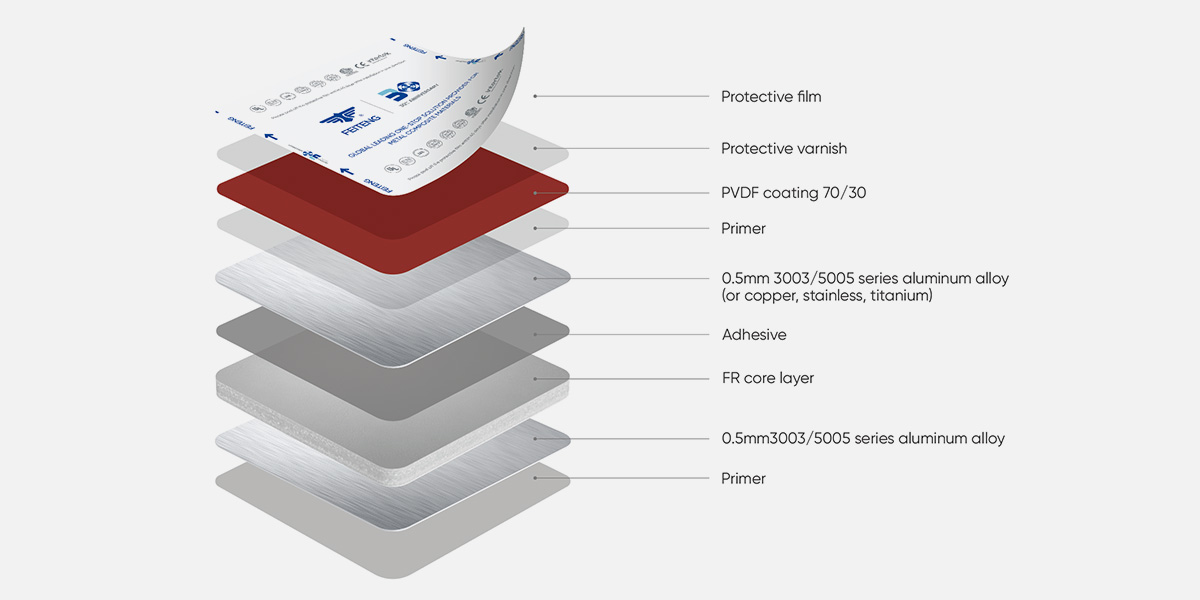
Engineered Composition: An aluminum composite panel is a three-layer sandwich panel combining two thin, pre-painted aluminum sheets bonded to a central core (typically polyethylene or a mineral-filled fire-retardant material).
Unmatched Strength-to-Weight Ratio: ACP delivers the rigidity of heavy-gauge sheet metal at a fraction of the weight, significantly reducing structural load and installation complexity.
Strict Compliance Requirements: Selecting the correct core material (PE vs. FR) is a critical decision-stage factor dictated by local building codes, building height, and fire safety regulations.
Total Cost Efficiency: While initial material costs vary based on core and coating types, ACPs generally lower total project costs through reduced structural support requirements and faster fabrication times.
Table of Contents
The exact anatomy of the panel relies on a continuous bonding process. The outer aluminum skins typically range from 0.12mm to 0.5mm in thickness. Manufacturers use specific architectural alloys, most commonly 3003-H14 or 5005-H14, to provide the necessary tensile strength and formability. These metal skins are permanently fused to an inner core using thermoplastic binders under extreme heat, tension, and pressure. The resulting "sandwich" structure acts as a single, unified sheet. The outer metal layers provide impact resistance and weather protection. The inner core provides volume, stability, and compressive strength without adding unnecessary mass. This composite action prevents the skins from buckling under load.
Before the lamination process occurs, the aluminum skins undergo a rigorous pre-treatment and painting process known as coil-coating. The raw aluminum coil is unrolled, cleaned with chemical solvents, treated with a conversion coating to prevent oxidation, and painted in a continuous automated line. This ensures uniform color consistency across massive production runs. Coil-coating provides superior adhesion compared to post-painting or spray application. The paint is baked onto the metal at high temperatures, offering excellent resistance to peeling, flaking, and blistering under harsh environmental exposure. Most architectural panels utilize a multi-coat system, including a primer, a color coat, and a clear topcoat for maximum durability.
In the construction and fabrication industries, terminology can sometimes create confusion. Aluminum Composite Panel (ACP), Aluminum Composite Material (ACM), and Aluminum Composite Sheets are industry terms used interchangeably. They all refer to the exact same sandwich-style product. Plastic distributors and industrial fabricators frequently use "ACM sheet" when referring to raw stock material resting on a warehouse rack. Architects and facade engineers might specify an "ACP system" when detailing a finished building envelope complete with extrusions and fasteners.
The most important technical specification of any composite panel is the composition of its core. This single factor dictates where and how the material can be legally installed on a job site.
Polyethylene (PE) Cores: This is the standard thermoplastic core. It is lightweight, easy to route, and highly flexible. PE-core panels are ideal for single-story buildings, commercial signage, gas station canopies, and interior applications where strict exterior fire codes do not apply. The core is typically black and melts when exposed to high heat.
Fire Retardant (FR) / Mineral-Filled Cores: This core replaces combustible plastics with a non-combustible mineral compound, usually aluminum hydroxide or magnesium hydroxide. These minerals release water vapor when exposed to high temperatures, actively resisting flame spread and reducing smoke generation. FR cores are absolutely mandatory for high-rise architectural cladding, hospitals, schools, and any strict compliance zones governed by modern building codes.

The primary engineering advantage of a composite panel is its strength-to-weight ratio. A standard 4mm panel weighs significantly less than a solid aluminum or steel sheet of equivalent rigidity. To achieve the same deflection resistance as a 4mm composite panel, a solid aluminum sheet would need to be roughly 3.3mm thick. The 4mm composite panel weighs approximately 1.12 to 1.5 pounds per square foot, while the equivalent solid aluminum weighs over 2.5 pounds per square foot. This massive weight savings directly impacts structural engineering requirements. It allows for lighter framing systems, fewer structural anchors, easier material handling on scaffolding, and reduced dead load on the building foundation.
Commercial availability dictates standard specifications across the industry. Understanding these dimensions helps in optimizing material yield and reducing waste during fabrication.
Standard Thicknesses: 3mm panels are primarily used for signage, displays, and interior cladding. The 4mm to 6mm range serves as the industry standard for exterior architectural cladding and heavy-duty industrial applications.
Standard Sheet Dimensions: Stock sizes typically include 4'x8' (48" x 96"), 5'x10' (60" x 120"), and 5'x12' (60" x 144"). For specialized architectural modules and large-scale facades, custom lengths can be manufactured up to 20 feet to minimize visible joints on the building exterior.
Panel Thickness | Aluminum Skin Thickness | Approximate Weight (lbs/sq ft) | Primary Application |
|---|---|---|---|
3mm | 0.12mm - 0.20mm | 0.80 - 0.95 | Flat Signage, Interior Displays |
3mm | 0.30mm | 1.00 - 1.10 | Channel Letters, Light Fabrication |
4mm | 0.50mm | 1.12 - 1.50 | Exterior Architectural Cladding |
6mm | 0.50mm | 1.50 - 1.80 | High-Wind Load Facades, Heavy Industrial |
Surface finishes dictate the longevity of the panel in its intended environment. Polyester (PE) coatings offer vibrant colors and high gloss levels, making them best suited for interior applications or short-term exterior signage. In contrast, Polyvinylidene Fluoride (PVDF) coatings are the undisputed industry standard for exterior architectural facades. PVDF resin systems, often recognized under brand names like Kynar 500, provide exceptional resistance to UV degradation, chemical exposure, chalking, and fading. These coatings meet AAMA 2605 specifications, ensuring the building envelope maintains its aesthetic integrity for decades even in coastal or heavy industrial environments.
While not a primary insulation material, the composite multilayer structure acts as a natural vibration and sound dampener. Highly resonant solid sheet metals tend to amplify rain noise and wind vibration, creating a drumming effect on the building exterior. The polymer or mineral core of a composite panel absorbs these acoustic waves, contributing to a quieter building interior. Additionally, the core provides a minor thermal break compared to a continuous solid metal sheet. This slightly reduces thermal bridging across the facade, though it does not replace the need for dedicated continuous insulation behind the rainscreen system.
Solid metal sheets are notorious for "oil canning"—a visible waving, buckling, or rippling effect across the surface caused by internal stresses and thermal expansion. The sandwich structure of the composite panel inherently resists this phenomenon. The tension between the two aluminum skins and the rigid core maintains a dead-flat surface, even under significant temperature fluctuations and direct solar heat gain. This optical flatness is crucial for modern, sleek architectural designs where large, uninterrupted metallic surfaces are desired.
In modern commercial building design, FR-core panels are extensively used in exterior envelope systems. They are the primary material for dry joint rainscreen systems. These systems allow water to drain behind the cladding while maintaining a watertight building barrier over the structural wall. The material's ability to be formed into crisp cassettes and complex geometric shapes makes it a favorite among architects designing futuristic or highly articulated facades. Installers mount these cassettes onto proprietary aluminum extrusion grids, creating a ventilated cavity that manages moisture and wind loads effectively.

The signage industry relies heavily on PE-core composite sheets. It is the preferred substrate for channel letter backing, monument signs, and pylon structures. The dead-flat surface and excellent ink adhesion properties make it ideal for direct UV digital printing and the application of large-format printed vinyl graphics. It provides the durability of metal without the heavy weight that would complicate sign installation. Fabricators can easily cut the material into custom logos and lettering using standard CNC routers.
Beyond exterior walls, the material excels in secondary use cases. It is frequently utilized for column covers, elevator cabs, cleanroom wall partitions, and high-end retail displays. The ease of routing and folding allows fabricators to create seamless corners and custom 3D structures on the shop floor. This makes it a highly versatile material for interior fit-outs and temporary exhibition stands where rapid assembly and clean aesthetics are required.
Material | Weight | Flatness (Oil Canning Risk) | Fire Resistance | Fabrication Flexibility |
|---|---|---|---|---|
Aluminum Composite Panel (FR Core) | Lightweight | Excellent (Dead Flat) | High (Code Compliant) | High (Rout and Return) |
Solid Aluminum Sheet | Heavy | Poor (High Risk) | 100% Non-Combustible | Moderate (Requires heavy braking) |
Fiber Cement Cladding | Very Heavy | Good | 100% Non-Combustible | Low (Brittle, cannot fold) |
High-Pressure Laminate (HPL) | Moderate | Good | Moderate to High | Low (Rigid panels) |
When comparing weight, cost, and flatness, the trade-offs become clear. Solid aluminum is 100% non-combustible and easily recyclable at the end of its life. However, it is significantly heavier, more expensive to transport, and highly prone to oil canning. The composite panel solves the flatness and weight issues, though it requires careful specification of the core material to match the fire performance of solid metal. Fabricating solid aluminum requires heavy press brakes, whereas composite panels can be folded using simple routing techniques.
Fiber cement offers a highly fire-resistant, durable facade option. However, it is incredibly heavy, brittle, and generates hazardous silica dust during cutting. The composite panel contrasts this by offering a lightweight, modern metallic aesthetic, rapid installation, and standard woodworking tool compatibility. This saves immense labor hours on the job site. Fiber cement cannot be folded or curved, severely limiting its architectural versatility compared to composite metal.
Both materials are used in modern rainscreen systems. While HPL offers excellent weatherability and scratch resistance, it is a rigid, flat panel. The composite panel offers superior formability. It can be rolled into smooth curves or folded into sharp 90-degree returns to wrap corners seamlessly. This fabrication technique is impossible with rigid HPL, which requires exposed edge treatments or corner trim pieces.
Fire compliance is the most critical aspect of specifying exterior cladding. Historically, the improper use of standard PE-core panels on high-rise buildings led to catastrophic cladding failures and rapid flame spread. Modern building codes have strictly addressed this. Today, adhering to standards like NFPA 285 in the United States or EN 13501-1 in Europe requires the exclusive use of FR-core panels for multi-story facades. These mineral-filled cores are engineered to resist ignition, prevent fire propagation up the exterior wall, and ensure safe egress for occupants. Building inspectors will demand material data sheets and independent testing laboratory reports before approving the installation.
Assessing the sustainability of composite materials requires looking at the end-of-life process. Unlike solid metals, recycling composite panels involves separating the aluminum skin from the thermoplastic or mineral core. While specialized recycling facilities possess the technology to shred and separate these materials for reuse, it is more complex than standard metal recycling. However, many manufacturers now produce panels utilizing a high percentage of post-consumer recycled aluminum and recycled core materials. This improves the overall environmental footprint of the product and can contribute to LEED certification points on commercial projects.
The unique "rout and return" fabrication method sets this material apart. Using a CNC router or a specialized track saw with a 90-degree or 135-degree V-groove bit, fabricators remove the back aluminum skin and a precise amount of the core material. They leave exactly 0.8mm of the core and the front aluminum skin intact. This allows the panel to be folded by hand into cassettes, pans, or complex 3D shapes without cracking the outer finish. The material is also highly compatible with standard table saws and shearing equipment, making on-site adjustments straightforward.
Attachment methods vary based on the application and weatherproofing strategy. Proper installation requires following a strict sequence of operations.
Sub-framing Installation: Installers attach aluminum Z-girts or hat channels to the structural wall over the weather-resistant barrier and continuous insulation.
Panel Preparation: Fabricated cassettes are fitted with perimeter extrusions and mounting clips in the shop.
Mounting: The panels are hung on the sub-framing using a progressive interlocking system or direct fastening.
Joint Treatment: Wet seal systems utilize backer rods and silicone sealants between panel joints to create a completely waterproof barrier. Dry joint rainscreen systems rely on an engineered extrusion grid to manage moisture behind the panels, leaving the joints open for ventilation.
Delamination: Adhesive failure between the aluminum skin and the core is usually caused by poor manufacturing quality control or extreme, unmitigated environmental exposure. Specifying materials from reputable manufacturers with proven warranties prevents this.
Galvanic Corrosion: This dissimilar metal corrosion occurs if aluminum panels are improperly fastened with non-compatible hardware, such as bare steel screws. Always use stainless steel or aluminum fasteners and isolate the panels from dissimilar structural metals using shim tape.
Thermal Expansion: Aluminum expands and contracts significantly with temperature changes. Installers must engineer joint gaps and use sliding clip systems to accommodate this natural movement; otherwise, the panels will buckle or tear at the fastener points.
An aluminum composite panel is a lightweight, durable, and highly versatile building material that combines excellent structural performance with outstanding design flexibility. Choosing the right core material, coating system, and installation method is essential to achieving long-term durability, fire safety, and compliance with local building regulations for modern architectural projects.
About Feiteng
Feiteng is a professional manufacturer of aluminum composite panels for architectural facades, commercial buildings, signage, and interior decoration. Backed by advanced production technology, strict quality control, certified fire-rated products, and flexible OEM/ODM services, Feiteng provides reliable ACP solutions that meet international standards for durability, safety, and long-term performance.
Choose ACP panels with the appropriate core material based on your project's fire safety requirements.
Verify coating systems, technical specifications, and certification documents before procurement.
Follow recommended fabrication and installation practices to maximize panel performance and service life.
Work with experienced manufacturers that provide consistent product quality and professional technical support.
Before selecting an aluminum composite panel, evaluate its core composition, coating technology, structural performance, fire compliance, manufacturing quality, and supplier expertise to ensure reliable results throughout the life of your project.
A: There is no difference; ACM stands for Aluminum Composite Material, and ACP stands for Aluminum Composite Panel. Both refer to the exact same sandwich-style panel used in construction and signage.
A: Yes, the aluminum skins and plastic/mineral cores are inherently impervious to water, making them highly effective for exterior rainscreen systems and weather-resistant facades.
A: High-quality panels with PVDF coatings typically have a lifespan of 20 to 30+ years in exterior applications, depending heavily on environmental conditions and proper installation.
A: Yes, though it requires proper surface preparation. This includes thoroughly cleaning the surface, scuffing the factory finish, and applying a primer compatible with the existing coating before painting.
A: Standard thicknesses range from 3mm to 6mm, with 3mm being standard for commercial signage and 4mm being the industry standard for exterior architectural cladding.
A: It depends entirely on the core. Standard polyethylene (PE) cores are highly combustible. Fire-retardant (FR) mineral cores must be specified to achieve fire ratings compliant with modern building codes.
A: Yes, PE-coated ACM sheets are highly compatible with flatbed UV digital printers, making them a premier choice for high-end retail displays, wayfinding, and commercial signs.


